Dubai-based founder building the next generation of tax software for global businesses. I started in the world of accounting and finance, built a successful tax and advisory firm (Alpha Pro Partners), and then turned those real-world pain points into a product: Tax Star, an AI-powered platform designed to make tax filing simpler, faster, and more accurate.
How to File a UAE Corporate Tax Return: A Complete Step-by-Step Guide for SMEs

August 1, 2026


Content
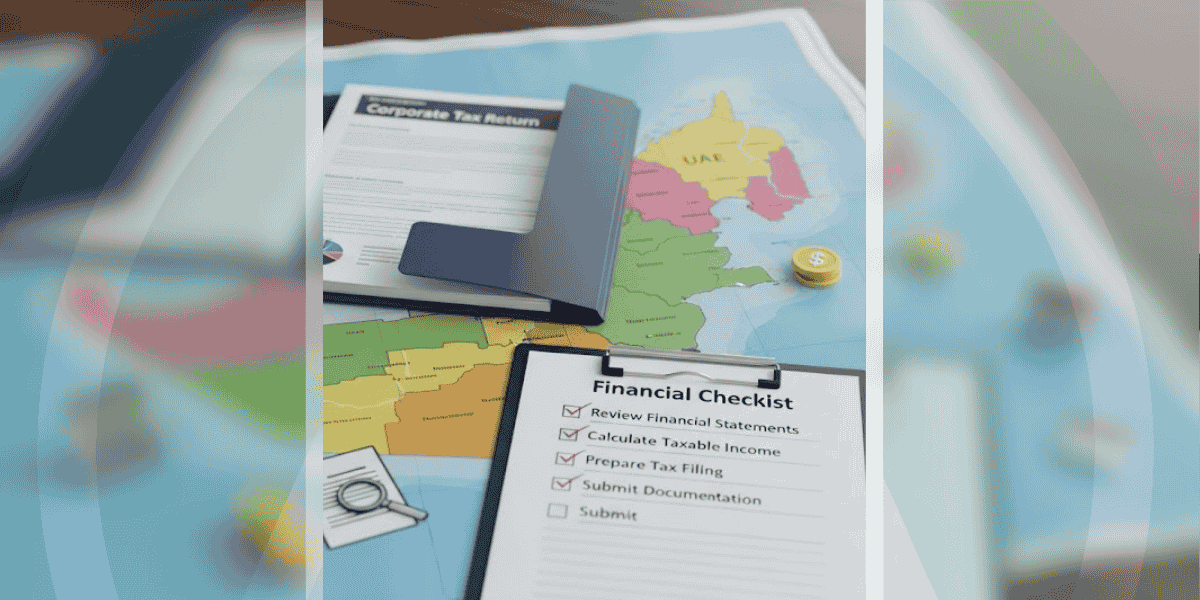
Your UAE Corporate Tax return is not something you should start on the filing deadline. Before you log in to EmaraTax, your bookkeeping should be complete, your financial statements should be ready, and your tax adjustments should be checked. You need to know whether your business can claim Small Business Relief, use carried-forward losses, or report related-party transactions. Once those pieces are ready, the filing process becomes much easier.
What You Need to Know Before You Start (Quick Reference)
Who Must File a UAE Corporate Tax Return?
All Taxable Persons registered for Corporate Tax must file a return for each tax period.
That includes businesses with no tax to pay.
A company may have taxable income below AED 375,000. It may claim Small Business Relief, record a tax loss, or qualify for a free zone 0% rate. The filing obligation still remains.
The main groups that need to file include:
- Mainland LLCs and other UAE companies
- Free zone entities
- Qualifying Free Zone Persons claiming 0% on Qualifying Income
- Foreign companies with a UAE Permanent Establishment
- Natural persons carrying on a UAE business where annual turnover exceeds AED 1 million
For natural persons, the AED 1 million threshold applies to turnover from a business or business activity. Salary, personal investment income, and qualifying real estate investment income do not form part of this test.
Some persons are exempt from Corporate Tax. These can include:
- Government entities
- Qualifying government-controlled entities
- Qualifying public benefit entities
- Qualifying pension and social security funds
- Businesses carrying out qualifying extractive or natural resource activities
Do not mix up tax exemption and filing exemption.
Some Exempt Persons do not submit a normal Corporate Tax return. They may still need to register and submit an annual declaration. The exact requirement depends on the exemption category and whether its conditions remain in place.
Step-by-Step: How to File Your UAE Corporate Tax Return
Step 1: Register on EmaraTax and Obtain Your TRN
You must complete Corporate Tax registration before filing. Go to eservices.tax.gov.ae, open the Corporate Tax registration service, and prepare your trade licence, Memorandum or Articles of Association, shareholder or manager passport copies, Emirates ID copies for UAE residents, business address, and financial year-end date.
The FTA will issue a Corporate Tax TRN, which is separate from your VAT TRN. A UAE company incorporated on or after 1 March 2024 must normally register within three months, and late registration carries an AED 10,000 penalty.
A current waiver may apply to late registrants. You need to register and file your first Corporate Tax return within seven months from the end of your first tax period to qualify.
Step 2: Know Your Deadline
Your Corporate Tax return must be filed within nine months from the end of your financial year. The tax payment is due on the same date.
Current examples:
- Financial year ending 31 December 2025, deadline 30 September 2026
- Financial year ending 30 June 2026, deadline 31 March 2027
The late filing penalty is AED 500 per month, or part of a month, for the first 12 months. It rises to AED 1,000 per month from month 13.
Unpaid tax can attract a charge calculated at 14% per annum, applied monthly to the outstanding amount.
Step 3: Prepare Your Financial Statements
Your return is based on financial statements prepared under IFRS or another standard accepted by the FTA. You will normally need an Income Statement, Balance Sheet, Cash Flow Statement, and Notes to the Accounts.
Audited financial statements are mandatory where revenue exceeds AED 50 million and for every Qualifying Free Zone Person. Below that threshold, reviewed or properly maintained accounts may be accepted, though audited accounts remain good practice.
Your licensing authority, free zone, bank, or shareholders may still require an audit.
Step 4: Calculate Your Taxable Income
Start with your accounting profit, then apply the tax adjustments required under UAE Corporate Tax rules.
The four main adjustments are:
- Deduct exempt income
Certain qualifying dividends and gains from Participating Interests may be exempt. Conditions apply, so not every investment gain or dividend qualifies. - Add back non-deductible expenses
Common examples include fines, penalties, personal costs, and the disallowed part of entertainment spending. Only 50% of qualifying entertainment expenditure is deductible. - Apply transfer pricing adjustments
Related Party and Connected Person transactions must follow the arm’s length principle. The value should reflect what independent parties would agree in a similar situation. - Offset carried-forward tax losses
Eligible tax losses can reduce up to 75% of taxable income in a tax period. Any unused eligible balance may remain available for later periods.
Here is a simple worked example:
Your business does not pay 9% on the full AED 520,000.
The first AED 375,000 is taxed at 0%. The 9% rate applies to the balance above that amount.
Step 5: Check Eligibility for Small Business Relief
An eligible Resident Person with revenue of AED 3 million or less may elect for Small Business Relief.
Revenue must remain at or below AED 3 million in the current and all previous tax periods. A Qualifying Free Zone Person and certain large multinational group members cannot claim it.
The relief applies to tax periods ending on or before 31 December 2026.
A valid election treats your business as having no taxable income for that period. The election is not automatic, so you must actively select it in the return.
Transfer pricing rules still apply, including the arm’s length principle. Formal transfer pricing documentation is not required where a valid Small Business Relief election applies.
Step 6: Complete the Transfer Pricing Disclosure
If your business has transactions with Related Parties or Connected Persons, you must answer the related questions in the Corporate Tax return.
This can include:
- Intercompany loans
- Management fees
- Rent paid to a shareholder
- Director remuneration
- Shared group expenses
- Sales between related companies
The return can ask for transaction categories, aggregate values, party details, the transfer pricing method used, market value, and any adjustment made.
Detailed schedules apply once current thresholds are crossed.
The Related Party Transactions Schedule is triggered when total related-party transactions exceed AED 40 million during the tax period. Transaction categories above AED 4 million then need to be disclosed.
The Connected Persons Schedule applies when total payments or benefits to Connected Persons exceed AED 500,000, subject to the return fields and reporting rules.
Small transactions still need a commercial basis and supporting records, even where the full detailed schedule is not triggered.
Step 7: File on EmaraTax
Log in to EmaraTax and open the Corporate Tax section for the correct Taxable Person.
The form will take you through:
- Tax period
- Accounting basis
- Revenue
- Accounting profit or loss
- Exempt income
- Tax adjustments
- Carried-forward losses
- Small Business Relief
- Free zone information
- Related Party and Connected Person questions
- Transfer pricing schedules, where triggered
- Corporate Tax payable
- Declaration and submission
Check all pre-filled information carefully.
Upload your financial statements and any schedules requested by EmaraTax. A business making a valid Small Business Relief election may have fewer filing fields and document requirements, but the supporting records still need to be kept.
Before submitting, confirm that the financial statements, tax computation, declared taxable income, reliefs, losses, and payment amount all agree.
Save the filing receipt and a full copy of the submitted return.
Step 8: Pay the Tax Due
Pay any Corporate Tax due by the same deadline as the return.
You can pay through:
- GIBAN bank transfer
- Credit, debit, or prepaid card through MagnatiPay
Your GIBAN is linked to your tax account. Create the payment reference in EmaraTax and copy it exactly into your bank payment details.
A wrong or missing reference can delay payment matching. The money may leave your bank account, yet EmaraTax may still show an unpaid liability.
Check your EmaraTax account after payment and keep the bank confirmation.
Documents You Need to File Your Corporate Tax Return
Use this checklist before starting the return.
Registration documents
- Trade licence and registration number
- Corporate Tax Registration Certificate and TRN
- Legal structure confirmation
- Mainland, free zone, or offshore status
Financial statements
- Income Statement or Profit and Loss report
- Balance Sheet
- Cash Flow Statement
- Notes to the Accounts
Supporting records
- General Ledger
- Bank statements for all business accounts covering the full tax year
- Revenue and expense records
- Sales and supplier invoices
- Contracts
- Payroll records
- Receipts
- Purchase orders
- Fixed Asset Register
- Depreciation schedules
If applicable
- VAT returns and VAT payment history
- Transfer Pricing documentation
- Related Party Transactions Schedule
- Connected Persons Schedule
- Master File and Local File, where required
- Non-deductible expense schedules
- Exempt income schedules
- Deferred tax schedules
- Carried-forward tax loss schedules
The filed return is not your full tax record.
You need to keep the documents that explain how each major number was calculated.
Deadlines and Penalties at a Glance
Free Zone Companies — Do You Still Need to File?
Yes.
A free zone company must file a Corporate Tax return, including a Qualifying Free Zone Person claiming a 0% rate.
A QFZP may benefit from 0% Corporate Tax on Qualifying Income. This can include income from transactions with other Free Zone Persons, approved Qualifying Activities with non-free zone customers, and certain qualifying intellectual property income.
The filing obligation remains, even where the final tax due is zero.
One key test is the de minimis rule.
Non-qualifying revenue must not exceed the lower of:
- AED 5 million
- 5% of total adjusted revenue
Audited financial statements are mandatory for every QFZP.
Failing the QFZP conditions can cause the business to lose its qualifying status from the start of the current tax period and for the following four tax periods.
The normal Corporate Tax rates then apply:
- 0% on taxable income up to AED 375,000
- 9% on taxable income above AED 375,000
A free zone licence does not guarantee a 0% Corporate Tax rate.
The business must meet the QFZP conditions each year, maintain adequate substance, follow transfer pricing rules, keep audited accounts, and remain within the de minimis limit.
Common Mistakes on Your First UAE Corporate Tax Return
1. Missing the nine-month deadline
Nine months can pass quickly when the bookkeeping cleanup, audit, tax calculation, and approval all start late.
Set an internal filing target at least four to six weeks before the legal deadline.
2. Using unaudited accounts when an audit is mandatory
Audited financial statements are mandatory when revenue exceeds AED 50 million.
They are mandatory for every QFZP too.
3. Forgetting transfer pricing disclosures
A small intercompany loan or management fee may not trigger the full detailed schedule.
It still needs to follow the arm’s length principle and be considered when answering the return questions.
4. Incorrectly classifying exempt income
Income from a Participating Interest is not automatically exempt.
One common route requires at least 5% ownership and an intended holding period of at least 12 months. Other conditions can apply.
5. Not offsetting carried-forward tax losses
Eligible losses from Corporate Tax periods starting on or after 1 June 2023 may be carried forward, subject to the legal conditions.
They can reduce up to 75% of the current period’s taxable income.
6. Failing to elect Small Business Relief
Small Business Relief is not applied automatically.
Your business must meet the conditions and actively select the election in the return.
7. Using the wrong GIBAN reference
A missing or incorrect payment reference can delay allocation.
EmaraTax may continue to show the tax as unpaid, even after the bank transfer has been sent.
Copy the reference exactly, then check the allocation after payment.
Frequently Asked Questions
When is the UAE Corporate Tax return due?
Your return is due within nine months from the end of your financial year. A calendar-year business ending on 31 December must file and pay by 30 September of the following year.
Do I need audited accounts?
Audited accounts are mandatory where revenue exceeds AED 50 million and for every Qualifying Free Zone Person. Below that threshold, reviewed or properly maintained accounts may be accepted, but audited financial statements remain good practice.
What if my income is below AED 375,000?
You still need to file if you are a Taxable Person. The first AED 375,000 of taxable income is taxed at 0%, and the amount above it is taxed at 9%.
Can I claim Small Business Relief?
You may qualify where revenue is AED 3 million or less in the current and all previous tax periods. You must actively elect for the relief in the return. It applies to eligible tax periods ending on or before 31 December 2026.
Do I need to file a Transfer Pricing Disclosure Form?
You must answer the Related Party and Connected Person questions when those transactions exist. Detailed schedules apply when the current thresholds are crossed, including AED 40 million for total related-party transactions and AED 500,000 for Connected Person payments or benefits.
How much does it cost to file?
The FTA does not charge a filing fee. Professional UAE Corporate Tax filing services can range from around AED 250 to AED 5,000 or more, based on bookkeeping quality, business size, free zone status, tax adjustments, and related-party activity.
What records do I need to keep after filing?
Keep your Corporate Tax records for at least seven years after the end of the relevant tax period. This includes financial statements, ledgers, invoices, bank statements, tax calculations, elections, schedules, and payment proof.
Your Corporate Tax return becomes much easier when your accounts are ready before the deadline month.
Book a UAE Corporate Tax filing review with Alpha Pro Partners. We can check your bookkeeping, calculate taxable income, review reliefs and related-party items, prepare the return, and support the filing and payment process through EmaraTax
Your UAE Corporate Tax return is not something you should start on the filing deadline. Before you log in to EmaraTax, your bookkeeping should be complete, your financial statements should be ready, and your tax adjustments should be checked. You need to know whether your business can claim Small Business Relief, use carried-forward losses, or report related-party transactions. Once those pieces are ready, the filing process becomes much easier.
What You Need to Know Before You Start (Quick Reference)
Who Must File a UAE Corporate Tax Return?
All Taxable Persons registered for Corporate Tax must file a return for each tax period.
That includes businesses with no tax to pay.
A company may have taxable income below AED 375,000. It may claim Small Business Relief, record a tax loss, or qualify for a free zone 0% rate. The filing obligation still remains.
The main groups that need to file include:
- Mainland LLCs and other UAE companies
- Free zone entities
- Qualifying Free Zone Persons claiming 0% on Qualifying Income
- Foreign companies with a UAE Permanent Establishment
- Natural persons carrying on a UAE business where annual turnover exceeds AED 1 million
For natural persons, the AED 1 million threshold applies to turnover from a business or business activity. Salary, personal investment income, and qualifying real estate investment income do not form part of this test.
Some persons are exempt from Corporate Tax. These can include:
- Government entities
- Qualifying government-controlled entities
- Qualifying public benefit entities
- Qualifying pension and social security funds
- Businesses carrying out qualifying extractive or natural resource activities
Do not mix up tax exemption and filing exemption.
Some Exempt Persons do not submit a normal Corporate Tax return. They may still need to register and submit an annual declaration. The exact requirement depends on the exemption category and whether its conditions remain in place.
Step-by-Step: How to File Your UAE Corporate Tax Return
Step 1: Register on EmaraTax and Obtain Your TRN
You must complete Corporate Tax registration before filing. Go to eservices.tax.gov.ae, open the Corporate Tax registration service, and prepare your trade licence, Memorandum or Articles of Association, shareholder or manager passport copies, Emirates ID copies for UAE residents, business address, and financial year-end date.
The FTA will issue a Corporate Tax TRN, which is separate from your VAT TRN. A UAE company incorporated on or after 1 March 2024 must normally register within three months, and late registration carries an AED 10,000 penalty.
A current waiver may apply to late registrants. You need to register and file your first Corporate Tax return within seven months from the end of your first tax period to qualify.
Step 2: Know Your Deadline
Your Corporate Tax return must be filed within nine months from the end of your financial year. The tax payment is due on the same date.
Current examples:
- Financial year ending 31 December 2025, deadline 30 September 2026
- Financial year ending 30 June 2026, deadline 31 March 2027
The late filing penalty is AED 500 per month, or part of a month, for the first 12 months. It rises to AED 1,000 per month from month 13.
Unpaid tax can attract a charge calculated at 14% per annum, applied monthly to the outstanding amount.
Step 3: Prepare Your Financial Statements
Your return is based on financial statements prepared under IFRS or another standard accepted by the FTA. You will normally need an Income Statement, Balance Sheet, Cash Flow Statement, and Notes to the Accounts.
Audited financial statements are mandatory where revenue exceeds AED 50 million and for every Qualifying Free Zone Person. Below that threshold, reviewed or properly maintained accounts may be accepted, though audited accounts remain good practice.
Your licensing authority, free zone, bank, or shareholders may still require an audit.
Step 4: Calculate Your Taxable Income
Start with your accounting profit, then apply the tax adjustments required under UAE Corporate Tax rules.
The four main adjustments are:
- Deduct exempt income
Certain qualifying dividends and gains from Participating Interests may be exempt. Conditions apply, so not every investment gain or dividend qualifies. - Add back non-deductible expenses
Common examples include fines, penalties, personal costs, and the disallowed part of entertainment spending. Only 50% of qualifying entertainment expenditure is deductible. - Apply transfer pricing adjustments
Related Party and Connected Person transactions must follow the arm’s length principle. The value should reflect what independent parties would agree in a similar situation. - Offset carried-forward tax losses
Eligible tax losses can reduce up to 75% of taxable income in a tax period. Any unused eligible balance may remain available for later periods.
Here is a simple worked example:
Your business does not pay 9% on the full AED 520,000.
The first AED 375,000 is taxed at 0%. The 9% rate applies to the balance above that amount.
Step 5: Check Eligibility for Small Business Relief
An eligible Resident Person with revenue of AED 3 million or less may elect for Small Business Relief.
Revenue must remain at or below AED 3 million in the current and all previous tax periods. A Qualifying Free Zone Person and certain large multinational group members cannot claim it.
The relief applies to tax periods ending on or before 31 December 2026.
A valid election treats your business as having no taxable income for that period. The election is not automatic, so you must actively select it in the return.
Transfer pricing rules still apply, including the arm’s length principle. Formal transfer pricing documentation is not required where a valid Small Business Relief election applies.
Step 6: Complete the Transfer Pricing Disclosure
If your business has transactions with Related Parties or Connected Persons, you must answer the related questions in the Corporate Tax return.
This can include:
- Intercompany loans
- Management fees
- Rent paid to a shareholder
- Director remuneration
- Shared group expenses
- Sales between related companies
The return can ask for transaction categories, aggregate values, party details, the transfer pricing method used, market value, and any adjustment made.
Detailed schedules apply once current thresholds are crossed.
The Related Party Transactions Schedule is triggered when total related-party transactions exceed AED 40 million during the tax period. Transaction categories above AED 4 million then need to be disclosed.
The Connected Persons Schedule applies when total payments or benefits to Connected Persons exceed AED 500,000, subject to the return fields and reporting rules.
Small transactions still need a commercial basis and supporting records, even where the full detailed schedule is not triggered.
Step 7: File on EmaraTax
Log in to EmaraTax and open the Corporate Tax section for the correct Taxable Person.
The form will take you through:
- Tax period
- Accounting basis
- Revenue
- Accounting profit or loss
- Exempt income
- Tax adjustments
- Carried-forward losses
- Small Business Relief
- Free zone information
- Related Party and Connected Person questions
- Transfer pricing schedules, where triggered
- Corporate Tax payable
- Declaration and submission
Check all pre-filled information carefully.
Upload your financial statements and any schedules requested by EmaraTax. A business making a valid Small Business Relief election may have fewer filing fields and document requirements, but the supporting records still need to be kept.
Before submitting, confirm that the financial statements, tax computation, declared taxable income, reliefs, losses, and payment amount all agree.
Save the filing receipt and a full copy of the submitted return.
Step 8: Pay the Tax Due
Pay any Corporate Tax due by the same deadline as the return.
You can pay through:
- GIBAN bank transfer
- Credit, debit, or prepaid card through MagnatiPay
Your GIBAN is linked to your tax account. Create the payment reference in EmaraTax and copy it exactly into your bank payment details.
A wrong or missing reference can delay payment matching. The money may leave your bank account, yet EmaraTax may still show an unpaid liability.
Check your EmaraTax account after payment and keep the bank confirmation.
Documents You Need to File Your Corporate Tax Return
Use this checklist before starting the return.
Registration documents
- Trade licence and registration number
- Corporate Tax Registration Certificate and TRN
- Legal structure confirmation
- Mainland, free zone, or offshore status
Financial statements
- Income Statement or Profit and Loss report
- Balance Sheet
- Cash Flow Statement
- Notes to the Accounts
Supporting records
- General Ledger
- Bank statements for all business accounts covering the full tax year
- Revenue and expense records
- Sales and supplier invoices
- Contracts
- Payroll records
- Receipts
- Purchase orders
- Fixed Asset Register
- Depreciation schedules
If applicable
- VAT returns and VAT payment history
- Transfer Pricing documentation
- Related Party Transactions Schedule
- Connected Persons Schedule
- Master File and Local File, where required
- Non-deductible expense schedules
- Exempt income schedules
- Deferred tax schedules
- Carried-forward tax loss schedules
The filed return is not your full tax record.
You need to keep the documents that explain how each major number was calculated.
Deadlines and Penalties at a Glance
Free Zone Companies — Do You Still Need to File?
Yes.
A free zone company must file a Corporate Tax return, including a Qualifying Free Zone Person claiming a 0% rate.
A QFZP may benefit from 0% Corporate Tax on Qualifying Income. This can include income from transactions with other Free Zone Persons, approved Qualifying Activities with non-free zone customers, and certain qualifying intellectual property income.
The filing obligation remains, even where the final tax due is zero.
One key test is the de minimis rule.
Non-qualifying revenue must not exceed the lower of:
- AED 5 million
- 5% of total adjusted revenue
Audited financial statements are mandatory for every QFZP.
Failing the QFZP conditions can cause the business to lose its qualifying status from the start of the current tax period and for the following four tax periods.
The normal Corporate Tax rates then apply:
- 0% on taxable income up to AED 375,000
- 9% on taxable income above AED 375,000
A free zone licence does not guarantee a 0% Corporate Tax rate.
The business must meet the QFZP conditions each year, maintain adequate substance, follow transfer pricing rules, keep audited accounts, and remain within the de minimis limit.
Common Mistakes on Your First UAE Corporate Tax Return
1. Missing the nine-month deadline
Nine months can pass quickly when the bookkeeping cleanup, audit, tax calculation, and approval all start late.
Set an internal filing target at least four to six weeks before the legal deadline.
2. Using unaudited accounts when an audit is mandatory
Audited financial statements are mandatory when revenue exceeds AED 50 million.
They are mandatory for every QFZP too.
3. Forgetting transfer pricing disclosures
A small intercompany loan or management fee may not trigger the full detailed schedule.
It still needs to follow the arm’s length principle and be considered when answering the return questions.
4. Incorrectly classifying exempt income
Income from a Participating Interest is not automatically exempt.
One common route requires at least 5% ownership and an intended holding period of at least 12 months. Other conditions can apply.
5. Not offsetting carried-forward tax losses
Eligible losses from Corporate Tax periods starting on or after 1 June 2023 may be carried forward, subject to the legal conditions.
They can reduce up to 75% of the current period’s taxable income.
6. Failing to elect Small Business Relief
Small Business Relief is not applied automatically.
Your business must meet the conditions and actively select the election in the return.
7. Using the wrong GIBAN reference
A missing or incorrect payment reference can delay allocation.
EmaraTax may continue to show the tax as unpaid, even after the bank transfer has been sent.
Copy the reference exactly, then check the allocation after payment.
Frequently Asked Questions
When is the UAE Corporate Tax return due?
Your return is due within nine months from the end of your financial year. A calendar-year business ending on 31 December must file and pay by 30 September of the following year.
Do I need audited accounts?
Audited accounts are mandatory where revenue exceeds AED 50 million and for every Qualifying Free Zone Person. Below that threshold, reviewed or properly maintained accounts may be accepted, but audited financial statements remain good practice.
What if my income is below AED 375,000?
You still need to file if you are a Taxable Person. The first AED 375,000 of taxable income is taxed at 0%, and the amount above it is taxed at 9%.
Can I claim Small Business Relief?
You may qualify where revenue is AED 3 million or less in the current and all previous tax periods. You must actively elect for the relief in the return. It applies to eligible tax periods ending on or before 31 December 2026.
Do I need to file a Transfer Pricing Disclosure Form?
You must answer the Related Party and Connected Person questions when those transactions exist. Detailed schedules apply when the current thresholds are crossed, including AED 40 million for total related-party transactions and AED 500,000 for Connected Person payments or benefits.
How much does it cost to file?
The FTA does not charge a filing fee. Professional UAE Corporate Tax filing services can range from around AED 250 to AED 5,000 or more, based on bookkeeping quality, business size, free zone status, tax adjustments, and related-party activity.
What records do I need to keep after filing?
Keep your Corporate Tax records for at least seven years after the end of the relevant tax period. This includes financial statements, ledgers, invoices, bank statements, tax calculations, elections, schedules, and payment proof.
Your Corporate Tax return becomes much easier when your accounts are ready before the deadline month.
Book a UAE Corporate Tax filing review with Alpha Pro Partners. We can check your bookkeeping, calculate taxable income, review reliefs and related-party items, prepare the return, and support the filing and payment process through EmaraTax
.webp)
%20(1).webp)
.webp)
.webp)
.webp)

























.webp)
.webp)
.webp)
.webp)
.webp)
.webp)









.webp)
.webp)

.png)
.png)
.png)
.png)
.png)

.png)
.png)



.png)
.png)


.jpg)


.jpg)


.png)
.png)



.png)