Dubai-based founder building the next generation of tax software for global businesses. I started in the world of accounting and finance, built a successful tax and advisory firm (Alpha Pro Partners), and then turned those real-world pain points into a product: Tax Star, an AI-powered platform designed to make tax filing simpler, faster, and more accurate.
VAT on digital services and SaaS in UAE — what businesses buying and selling software need to know

September 24, 2026


Content
VAT on digital services and SaaS in UAE changed from 1 January 2026. Businesses no longer prepare self-invoices for reverse charge purchases, older refundable balances now face a five-year limit, and the Federal Tax Authority can reject input VAT linked to tax evasion. The UAE e-invoicing pilot started in July 2026 too. This guide is for UAE companies buying or selling software, cloud platforms, online advertising, apps, and subscription services, plus foreign SaaS providers selling into the UAE. It explains who charges VAT, who reports it, and what evidence should sit behind each transaction.
What Counts as a Digital Service Under UAE VAT?
Article 31 of the UAE VAT Executive Regulation covers telecommunications and electronic services. For electronic services, the supply is delivered through the internet or another electronic network, is largely automated, and needs little direct human involvement once the customer signs up.
That covers many of the tools used by UAE businesses every day:
- SaaS and cloud software
- CRM and accounting platforms
- Domain registration and web hosting
- Mobile apps and digital downloads
- Streaming subscriptions
- Digital advertising space
- E-books and digital content
- Recorded online courses
- API access
- Cloud storage
- Subscription-based AI tools
SaaS sits squarely in this category. A standard monthly or annual software subscription is normally an electronic service and carries 5% UAE VAT when the customer uses and enjoys it in the UAE.
Custom development needs a closer look. A project involving workshops, manual coding, consulting, and a product built for one customer can still be a taxable service, but it may not fit the automated electronic-service rules in the same way as an off-the-shelf subscription.
Telecoms services have separate place-of-supply rules under Article 31.
What VAT Rate Applies? (The Short Answer)
The standard UAE VAT Registration rate is 5%. It applies to most digital services and SaaS used in the UAE.
A service can qualify for 0% VAT where the customer and the use of the service are outside the UAE. Digital services are not normally exempt. Exemption covers separate categories, such as certain financial services and residential property.
Who Must Register for VAT? Thresholds for Digital Businesses
Your registration position depends on where the business is established, who buys the service, and who accounts for VAT.
A UAE-resident business must register once taxable supplies and imports exceed AED 375,000 over the previous 12 months. Registration is needed sooner where the business expects to cross that figure within the next 30 days. Voluntary registration starts at AED 187,500.
Foreign SaaS providers face a different rule. The AED 375,000 threshold does not apply where a non-resident supplier makes taxable UAE sales and no other UAE person is responsible for the VAT. The first taxable B2C sale to a UAE consumer can create a registration duty.
A foreign supplier selling only to VAT-registered UAE businesses may rely on RCM, with the customer reporting VAT. This does not work for a consumer or another customer without a UAE VAT return.
Late registration can lead to an AED 10,000 penalty.
The Reverse Charge Mechanism — How B2B Software Purchases Work
RCM comes into play when a UAE VAT-registered business buys a taxable digital service from a supplier outside the UAE.
The supplier will usually send the invoice without UAE VAT. The UAE customer then calculates 5% VAT and includes it in its own VAT return. It can claim the same amount as input VAT where the subscription supports taxable business activity.
For a business making fully taxable supplies, the two entries often cancel each other out. The reporting still needs to appear in the return.
For the foreign seller, the invoice should make the treatment clear. A practical note is:
"Reverse charge applies. VAT to be accounted for by the recipient."
The customer must have a valid UAE Tax Registration Number (TRN). A sale to a customer without a TRN needs a separate B2C registration review.
Take a London SaaS provider that invoices a Dubai company AED 10,000 a month for CRM licences.
The invoice shows AED 10,000 and no UAE VAT. The Dubai customer records AED 500 as output VAT and, where it has full recovery rights, claims AED 500 as input VAT. No VAT cash payment arises, but both entries still belong in the return.
From 1 January 2026, the UAE customer does not prepare a self-invoice for this purchase. It keeps the supplier invoice, contract, payment proof, and VAT working instead.
Zero-Rating vs. Exemption — What Digital Businesses Need to Know
Zero-rating and exemption both leave the customer invoice without a VAT charge. Their effect on your own costs is different.
A digital service can qualify for zero-rating where the customer is outside the UAE, the customer is outside any GCC Implementing State, the service is used outside the UAE, and the supply is not linked to UAE real estate or another UAE-based asset.
A zero-rated supplier charges 0% and can normally recover VAT paid on business expenses.
An exempt supplier charges no VAT and usually loses the right to recover VAT linked to that supply.
A foreign billing address is only one piece of evidence. It does not prove where the customer used the service.
Keep records that show how and where the account was used. Contracts, payment details, user locations, IP logs, and account settings can support the VAT treatment.
VAT on Specific Digital Service Types
The rate may be easy to spot. The harder part is working out the tax point, who is treated as the seller, and which invoice belongs in your return.
SaaS Subscriptions
Monthly and annual SaaS fees are normally taxed at 5% when the software is used in the UAE. For recurring plans, VAT can follow the invoice, payment, or start of the paid service, depending on the date-of-supply rules.
A free trial with no payment usually has no VAT charge. VAT starts when the customer moves to a paid plan.
Digital Advertising (Google, Meta, LinkedIn)
A UAE business buying ads from an overseas platform may receive an invoice with no UAE VAT. The purchase can still fall under RCM.
The UAE buyer reports 5% output VAT and claims the recoverable amount as input VAT. This often applies to Google Ads, Meta, LinkedIn, programmatic platforms, and foreign agencies.
App Stores & Marketplace Platforms
VAT depends on the platform agreement and who is treated as the supplier.
The asset transaction and any service fee need separate VAT coding.
Free Zone vs. Mainland — Does It Change Your VAT Position?
A free zone licence does not make digital services VAT-free.
Businesses in DMCC, JAFZA, RAKEZ, SHAMS, Ajman Free Zone, and other UAE free zones use the same digital-service VAT rules as mainland companies.
You still need to look at the customer's location, where the service is used, and whether the customer has a valid TRN. Those points decide whether you charge 5%, apply 0%, or leave the VAT accounting to the UAE buyer under RCM.
A free zone business serving customers outside the UAE may zero-rate its sales where the export conditions are met. It still needs records showing that the customer and the use of the service are outside the UAE.
The special Designated Zone rules mainly deal with goods. They do not give SaaS, apps, hosting, advertising, or cloud subscriptions a blanket VAT exemption.
What Changed in January 2026 — The New VAT Amendments
Federal Decree-Law No. 16 of 2025 changed the UAE VAT law from 1 January 2026. Digital businesses should review five areas.
Self-invoices removed
A business applying RCM no longer needs to create a self-invoice. Keep the foreign supplier invoice, contract, payment proof, and VAT calculation.
Five-year refund limit
A five-year limit now applies to excess refundable VAT requests after reconciliation. Qualifying historic balances whose period ended before 1 January 2026, or ends during 2026, have a temporary route. File the request by 31 December 2026.
Input VAT checks tightened
The FTA can reject input VAT where a supply forms part of a tax-evasion arrangement and the buyer knew, or should have known, about it. Check the supplier's TRN, invoice, trading activity, and payment route.
Smaller errors
Certain errors with a tax impact of AED 10,000 or less can be corrected in the next VAT return, subject to the legal conditions. Larger errors can still require a Voluntary Disclosure.
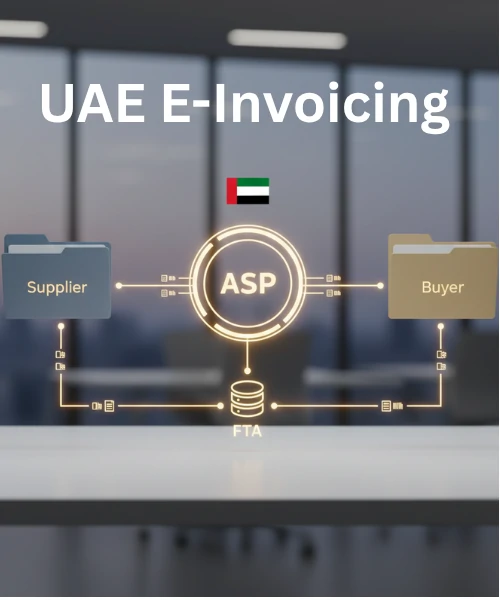
UAE e-invoicing
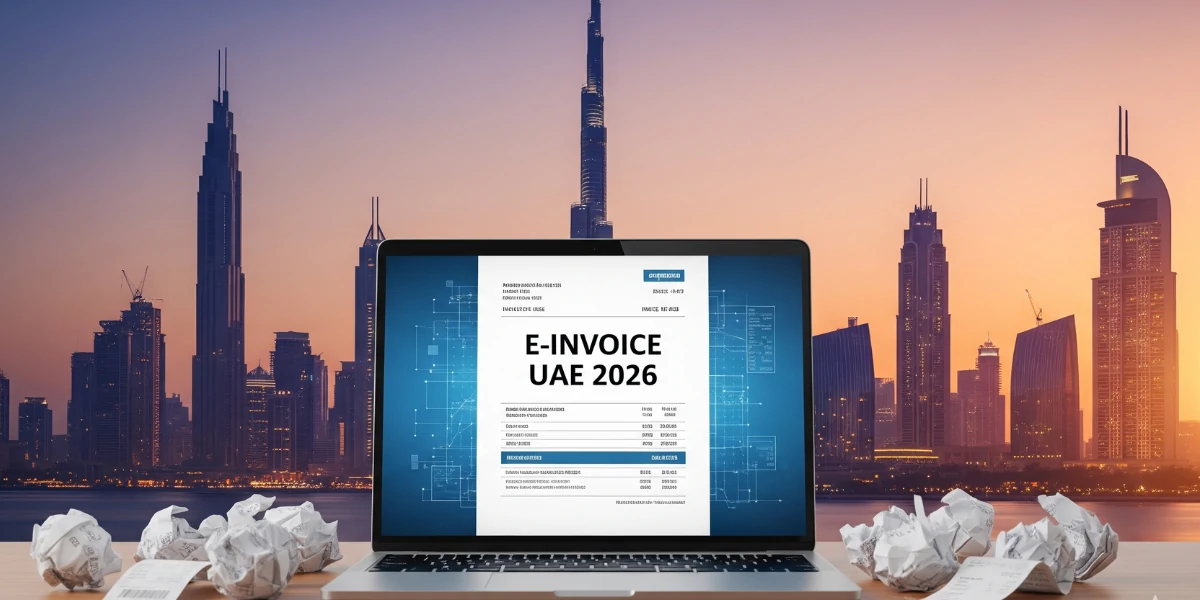
The pilot and voluntary phase began on 1 July 2026. Businesses with revenue of AED 50 million or more must appoint an Accredited Service Provider by 30 October 2026 and start on 1 January 2027. Businesses below AED 50 million must appoint a provider by 31 March 2027 and start on 1 July 2027.
How to File VAT Returns as a Digital Business
VAT returns are filed through EmaraTax under your TRN.
The FTA may assign monthly or quarterly tax periods. The return and payment are normally due within 28 days after the tax period ends.
Your accounting records should separate standard-rated UAE sales, zero-rated exports, exempt income, overseas purchases reported under RCM, recoverable input VAT, blocked input VAT, and the final amount payable or refundable.
B2C sales carrying 5% VAT should not be mixed with foreign B2B sales where the UAE customer handles RCM.
You can normally claim input VAT on business software, cloud hosting, digital advertising, payment processing fees, and online tools used to make taxable supplies. Keep the supplier invoice or RCM records.
VAT files should retain invoices, contracts, platform statements, payment records, customer location evidence, and return calculations for at least five years.
Check software and advertising invoices every month, not just before filing. One wrong tax code can quietly repeat across several returns and take hours to unwind later.
Penalties — What Happens if You Get This Wrong
The UAE administrative penalty rules changed on 14 April 2026.
Tax evasion can lead to criminal action. A small SaaS invoice can become a larger issue when the same VAT code is used across several periods. Correct errors as soon as they are found.
Frequently Asked Questions
Do I need to register for UAE VAT if I am based outside the UAE but selling digital services to UAE customers?
You may need to register where you make a taxable UAE sale and no UAE person accounts for the VAT. Non-resident suppliers do not get the AED 375,000 threshold in this case. One B2C sale to a UAE consumer can create a registration duty.
Can I use reverse charge to avoid registering for VAT in the UAE?
RCM can cover qualifying B2B sales to VAT-registered UAE customers. The customer reports the VAT. It cannot cover sales to consumers or customers without a UAE VAT return.
What is the difference between zero-rating and exemption for digital services?
With zero-rating, the customer pays 0% VAT and the supplier can usually recover VAT linked to the sale. An exempt supply carries no VAT charge, but related input VAT is usually blocked. Most SaaS and digital services in the UAE are standard-rated.
If I use an app store or marketplace to sell my digital product, who handles VAT?
Check the platform agreement. A platform acting as the seller or undisclosed agent may collect and report VAT. A platform acting only as an agent may leave the VAT duty with your business.
Can I claim input VAT on a SaaS subscription I use for my business?
Yes, where you are VAT-registered, the subscription supports taxable activity, and you hold the required invoice or RCM evidence. Recovery may be restricted for private use or exempt activity.
Is SaaS subject to VAT in the UAE?
Yes. SaaS is normally an electronic service. The standard rate is 5% when the service is used and enjoyed in the UAE. An overseas sale can qualify for 0% where the export conditions are met.
What happens if I have been non-compliant? Can I register late?
You can still register through EmaraTax. An AED 10,000 late registration penalty may apply. Review earlier sales, purchases, invoices, and returns after registration to find any tax that still needs to be reported.
Are there any VAT exemptions for startup digital businesses?
No special VAT exemption applies simply for being new. UAE-resident startups use the normal AED 375,000 mandatory threshold and AED 187,500 voluntary threshold. Foreign suppliers may face registration with no threshold.
Key Takeaways for 2026
- Register for B2C UAE sales where no UAE person accounts for VAT.
- Use RCM for qualifying B2B software purchases and sales.
- Separate zero-rated sales from exempt supplies.
- Update your process for the 2026 VAT changes.
- Check your e-invoicing deadline and appoint an Accredited Service Provider on time.
- Keep five years of invoices, RCM workings, payments, and customer-location evidence.
VAT on digital services and SaaS in UAE is easier to manage when sales, subscriptions, customer locations, and VAT codes are reviewed each month.
Book a SaaS VAT review with Alpha Pro Partners to check digital sales, software costs, RCM entries, and VAT returns.
.webp)
.webp)
.webp)
.webp)






















.webp)
.webp)
.webp)
.webp)
.png)
.png)



.png)